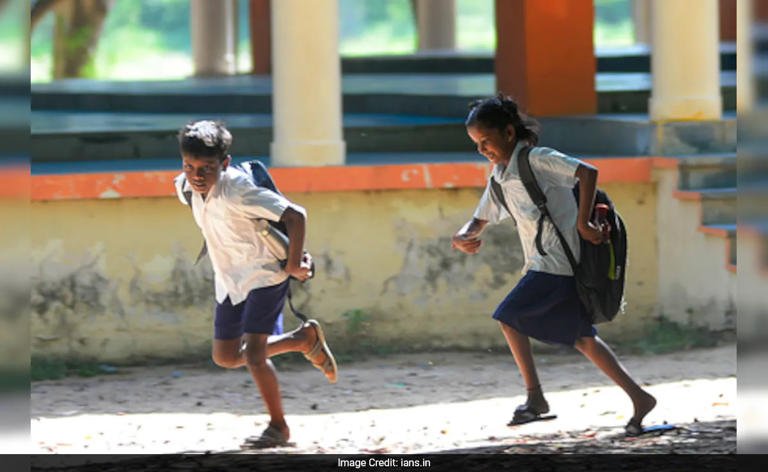
According to the latest findings from UNESCO’s Global Education Monitoring (GEM) Team, the worldwide number of children and youth not attending school has reached an estimated 272 million. This figure marks an increase of over 21 million compared to previous assessments. The report further indicates that by 2025, nations are projected to fall short of their educational objectives by approximately 75 million individuals when measured against their national benchmarks.The recent increase in the global out-of-school population, as highlighted by UNESCO’s Global Education Monitoring Report, is attributed to two primary factors:Revised Enrollment and Attendance Data: Updated statistics have identified an additional eight million children not attending school, accounting for 38% of the overall rise.Policy Changes in Afghanistan: The 2021 prohibition on girls attending secondary schools in Afghanistan has significantly contributed to the surge in out-of-school numbers.Collectively, these elements have led to an increase of over 21 million in the global count of out-of-school children, bringing the total to approximately 272 millionAccording to the report, the updated United Nations population projections indicate that the number of children aged 6 to 17 in 2025—a demographic representing the school-age population—is expected to be 49 million higher than previously estimated, marking a 3.1% increase. This adjustment accounts for 13 million individuals, or 62% of the overall rise in the out-of-school population.The report also highlights that the effects of conflicts on out-of-school populations are often underestimated, as conflicts impede data collection efforts. In regions affected by conflict, the disruption hampers the accurate assessment of educational participation, leading to potential underreporting of the number of children not attending school.According to the latest data from UNESCO, as of 2025, approximately 272 million children and youth worldwide are not enrolled in school. This figure includes about 78 million primary school-aged children, 64 million lower secondary school-aged adolescents, and 130 million upper secondary school-aged youth. These numbers indicate that 11% of primary-aged children, 15% of lower secondary-aged adolescents, and 31% of upper secondary-aged youth are out of schoolThe increase in out-of-school children is partly attributed to updated demographic estimates, which show a rise of nearly 50 million in the total school-age population. Additionally, new data from conflict-affected countries such as Burkina Faso, Ethiopia, and South Sudan have contributed to the higher figures.UNESCO’s model for estimating out-of-school populations relies on both administrative data and household surveys. In countries with large out-of-school populations, where administrative data may be incomplete or outdated, household surveys provide supplementary information. However, these surveys may not fully capture recent increases in school-age populations, leading to estimates where only a portion of the additional children are accounted for as out of school.To address this issue, countries have collectively committed to reducing the number of out-of-school children by 165 million by 2030. This goal is part of the Sustainable Development Goal 4 (SDG 4) targets, which aim to achieve universal primary and secondary education. Achieving this objective will require significant investments in education systems, particularly in regions with high out-of-school rates.The out-of-school model estimates are based on the assumption that school-age populations progress through the education system in stable patterns. While this methodological strength ensures consistency under normal circumstances, it becomes a limitation during emergencies and crises when school attendance patterns can change abruptly. In such situations, long-term trends may not continue, and there is often insufficient information to understand the short- and medium-term impacts of crises. Conflicts, in particular, hinder data collection on school participation, leading to potential underestimations of out-of-school populations.
Over 272 Million Children Out-Of-School Across The Globe: Report