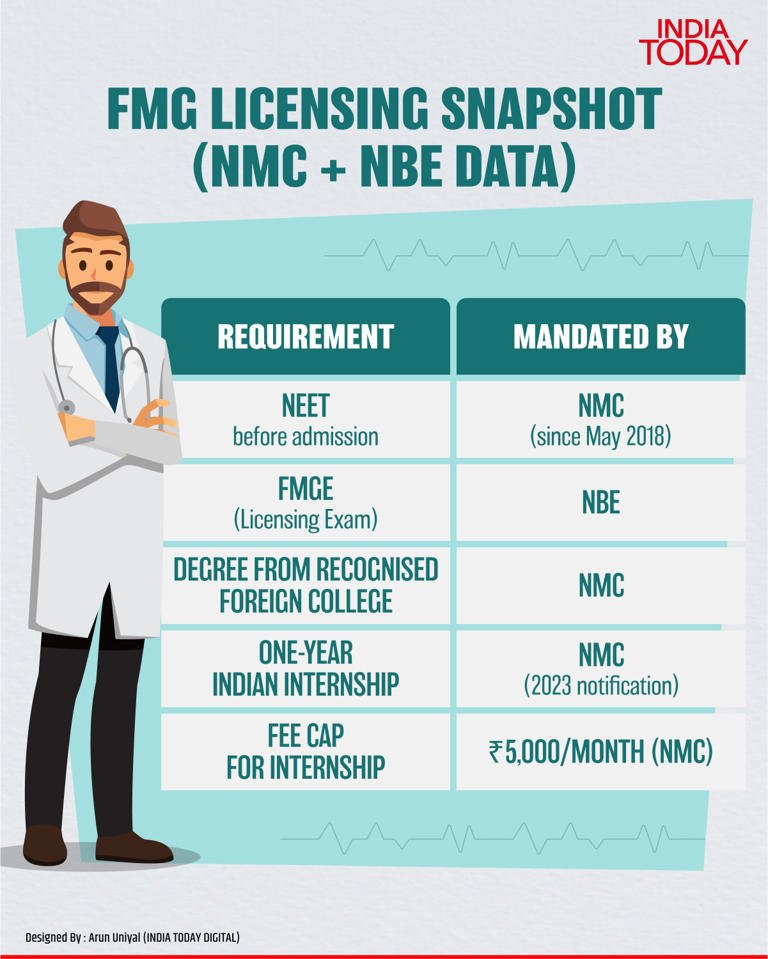
With over 23 lakh students competing for just 1.1 lakh MBBS seats in India in 2025, the country’s medical education system is facing a severe demand-supply mismatch. Of these seats, only about 55,000 are in government colleges with affordable fees, while private institutions often charge upwards of ₹80 lakh to ₹1 crore—making them inaccessible for many families. This intense competition and financial burden are driving thousands of Indian students to pursue medical education abroad, particularly in countries like the Philippines, Russia, China, Kyrgyzstan, and the Caribbean. These destinations offer lower tuition fees (₹25–40 lakh), modern infrastructure, and early clinical exposure, making them attractive alternatives. Foreign universities also provide flexible admission criteria, evaluating students on their academic records, language skills, and interviews—unlike India’s single-exam NEET system. Many of these institutions are recognized by global bodies like the World Federation for Medical Education (WFME) and Educational Commission for Foreign Medical Graduates (ECFMG), enabling graduates to pursue licensure in countries like the US, UK, and Canada. While challenges like cultural adaptation and foreign licensing exams remain, experts say studying abroad is increasingly seen as a strategic choice, not a fallback. For many, it’s the only viable path to becoming a doctor in a globally connected healthcare landscape
Seat Crunch and Soaring Costs Push Indian Medical Aspirants Abroad in Record Numbers