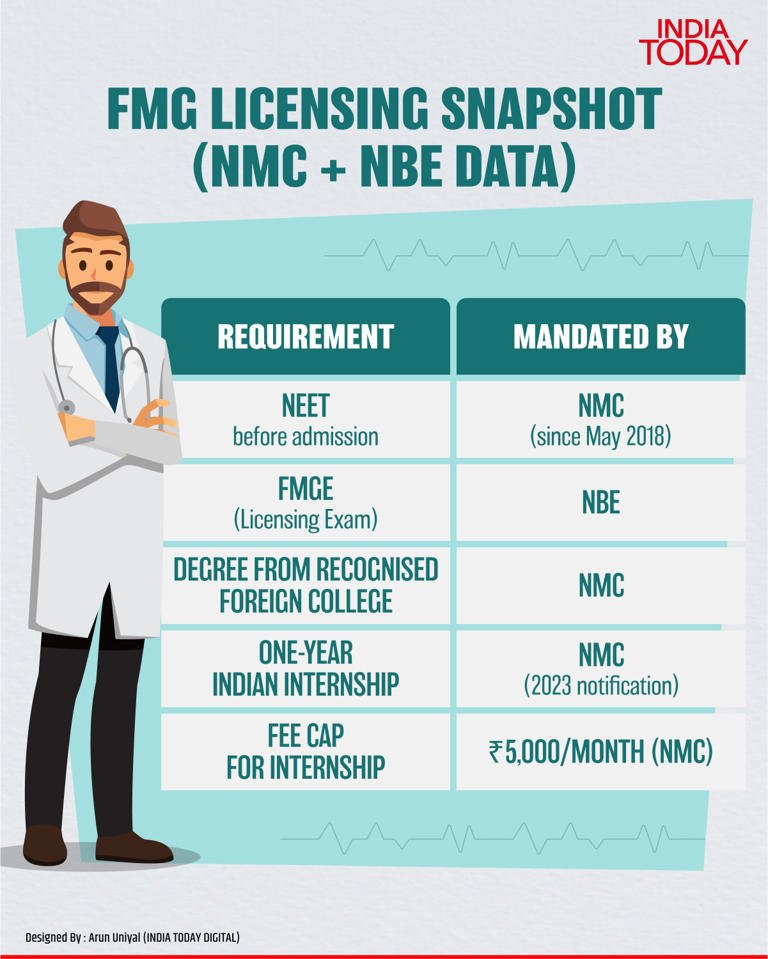
Each year, a significant number of Indian students head overseas to study medicine, primarily due to the limited number of seats and steep tuition fees at private medical colleges in India. Countries in the Middle East—particularly the UAE, Saudi Arabia, Oman, and Egypt—have gained popularity as study destinations because of their cost-effectiveness, geographic closeness, and cultural similarities. As per data from the Ministry of External Affairs (MEA), more than 7.59 lakh Indian students were enrolled in foreign institutions in 2024. Although the MEA does not provide program-specific statistics, insights from diplomatic missions and anecdotal evidence suggest that MBBS is one of the most sought-after courses in nations like the UAE, Egypt, and Saudi Arabia. According to data released by the National Medical Commission (2024):Total MBBS seats available in India: approximately 1,08,915Seats in government medical colleges: around 56,000Seats in private institutions and deemed universities: nearly 52,000In 2024, over 21 lakh students appeared for the NEET exam, all vying for roughly 56,000 budget-friendly government seats. This means there was just one seat available for every 375 candidates. The National Medical Commission (NMC) governs how foreign medical graduates (FMGs) can practice in India. As per its latest regulations, here’s what students must complete to become eligible: ELIGIBILITY CRITERIA FOR FOREIGN MEDICAL GRADUATES (FMGS)NEET Qualification Before Admission Mandatory since May 2018Acts as an eligibility certificate for studying MBBS abroad To practice medicine in India after obtaining a medical degree from a foreign institution, Indian citizens and Overseas Citizens of India (OCI) must pass the Foreign Medical Graduate Examination (FMGE). This examination is conducted twice a year, in June and December, by the National Board of Examinations (NBE). The FMGE is a mandatory requirement for obtaining provisional or permanent registration with the NMC. The exam comprises 300 multiple-choice questions divided into two parts, and a minimum score of 150 out of 300 is required to pass. The medium of the exam is English, and there is no negative marking.The FMGE has historically been a challenging examination, with pass rates varying based on the country of graduation. Between 2015 and 2022, the average pass percentage ranged from 11% to 23%. For instance, in the December 2024 session, the overall pass rate was 29.62%, with country-specific pass rates as follows: Bangladesh: 26.79%China: 9.09%Russia: 19.43%Ukraine: 18.68%These statistics highlight the importance of choosing a reputable institution and adequately preparing for the FMGE.Mandatory Internship in IndiaDuration: FMGs are required to complete a 12-month Compulsory Rotating Medical Internship (CRMI) in India.Approved Institutions: The internship must be undertaken in NMC-approved hospitals or medical colleges. As of the latest guidelines, there are 673 recognized hospitals, including non-teaching institutions, where FMGs can complete their CRMI. Fee Structure: Institutions may charge a maximum of ₹5,000 per month for the internship. Online Course Completion: FMGs who completed parts of their medical education online due to disruptions like the COVID-19 pandemic are subject to additional requirements: Final Year Disruption: Those who had a break in their final year and completed their course online must undergo a 1-year clinical clerkship in India before starting the CRMI. Penultimate Year Disruption: Students with a break in their penultimate year and completed their course online are required to complete a 2-year clinical clerkship in India prior to the CRMI. Clerkship Fee: For these clerkships, institutions may charge up to ₹5,000 per month. Online Course Completion: FMGs who completed parts of their medical education online due to disruptions like the COVID-19 pandemic are subject to additional requirements:Final Year Disruption: Those who had a break in their final year and completed their course online must undergo a 1-year clinical clerkship in India before starting the CRMI. Penultimate Year Disruption: Students with a break in their penultimate year and completed their course online are required to complete a 2-year clinical clerkship in India prior to the CRMI. Clerkship Fee: For these clerkships, institutions may charge up to ₹5,000 per month.