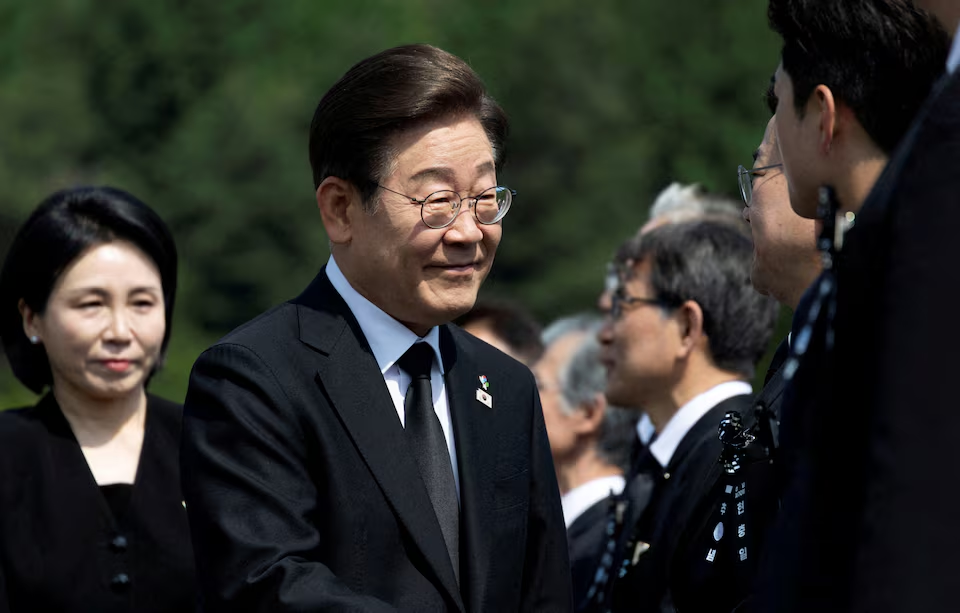
On June 18, 2025, South Korean President Lee Jae-myung and Japanese Prime Minister Shigeru Ishiba convened for their inaugural summit during the G7 meeting in Canada. This engagement underscored a mutual commitment to fortify bilateral relations and enhance trilateral cooperation with the United States, amidst regional tensions involving North Korea and China’s growing influence Prime Minister Ishiba echoed this sentiment, highlighting the strategic significance of Japan-South Korea relations and the necessity of close cooperation with the United States to address regional challenges, including North Korea’s nuclear threat and economic competition from China This summit marked a notable shift for President Lee, who had previously criticized efforts to mend ties with Tokyo. His participation in the G7 summit, his first international engagement since winning the June 3 election following the impeachment of his predecessor Yoon Suk Yeol, signals a pragmatic diplomatic approach focused on mutual benefit and security cooperation President Lee described the bond between the two nations as “inseparable,” likening it to “neighbors sharing a common front yard.”. Historically, relations between these U.S. allies have experienced tensions, primarily due to disputes stemming from Japan’s colonial governance of the Korean peninsula between 1910 and 1945. The United States has been advocating for closer cooperation between the two countries to effectively tackle regional issues such as North Korea’s nuclear ambitions and the escalating strategic competition with China. Now, adopting a more pragmatic stance, Lee is focusing on strengthening security cooperation among South Korea, Japan, and the United States.In line with this renewed collaboration, the three nations conducted a joint air drill over international waters south of Jeju Island. The exercise involved South Korean F-15Ks, U.S. F-16s, and Japanese F-22s, aiming to bolster security ties and address regional threats, particularly from North KoreaPresident Lee’s participation in the G7 summit, his first international engagement since taking office, underscores his commitment to global cooperation. During the summit, he also met with British Prime Minister Keir Starmer to discuss updating a trade agreement and with Indian Prime Minister Narendra Modi to enhance strategic ties, highlighting South Korea’s broader international engagement under his leadershipThis evolution in President Lee’s diplomatic approach reflects a broader strategy to navigate complex geopolitical challenges through strengthened alliances and pragmatic cooperation.
South Korea’s Lee cites ‘inseparable’ relationship with Japan in first summit