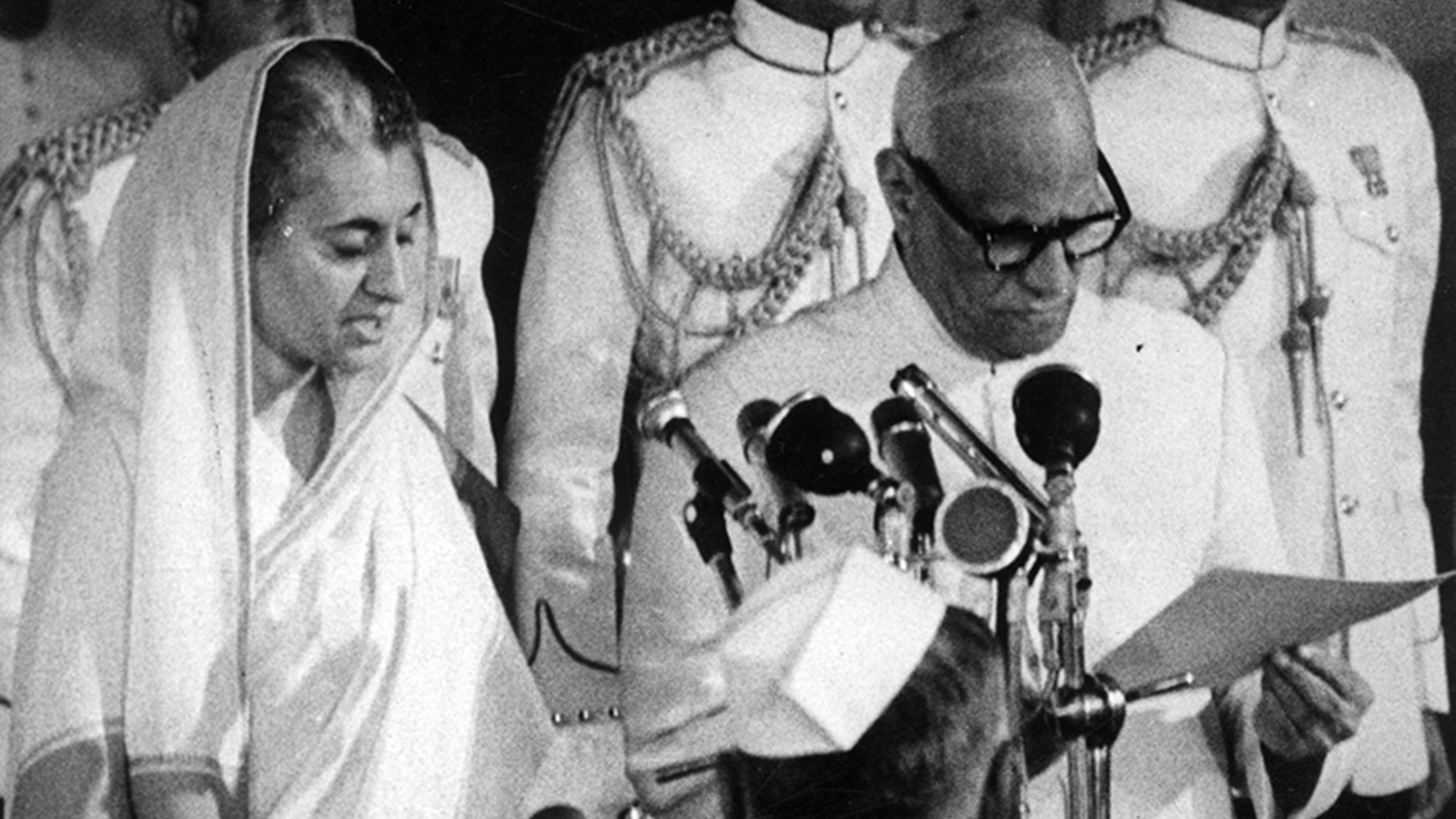
At 10 am on June 12, 1975, Justice Jagmohan Lal Sinha arrived at Courtroom Number 24 of the Allahabad High Court and assumed his seat in the overcrowed courtroom. He then delivered a verdict that would have historic consequences for then Prime Minister Indira Gandhi — and for India. Allowing the petition of Raj Narain, who, following his loss to Indira Gandhi in the 1971 election, had moved court alleging electoral malpractices by the Prime Minister, Justice Sinha said. For the first time in the history of independent India, a Prime Minister’s election had been set aside. Months earlier, the courtroom had witnessed another first — the Prime Minister being cross-examined for two consecutive days. The room has now been redesignated ‘Nyay Kaksh or Courtroom 34’ as part of a regular administrative rejig. The petition was first listed before Justice William Broome, the last British judge of the High Court. But Broome retired in December 1971, after which it went to at least two different benches — that of Justice B N Lokur and Justice K N Srivastava – but their retirements led to the petition being assigned to Justice Sinha in early 1975. The recording of the oral evidence started on February 12, 1975, the courtroom witnessed several high-profile witnesses on either side – P N Haksar, then vice chairman, Planning Commission, who appeared for Indira Gandhi; and L K Advani, Karpoori Thakur and S Nijalingappa who deposed for Raj Narain.By all accounts, people had poured into the court complex by 9 am, nearly an hour before Justice Sinha could arrive. Among those present in the court were leading advocates and political stalwarts of the time – Opposition leaders Madhu Limaye, Shyam Nandan Mishra and Rabi Ray and, on the other side, Indira Gandhi’s son Rajiv Gandhi and daughter-in-law Sonia Gandhi.Over the next three weeks, as he wrote the judgment, Justice Sinha is said to have locked himself up at home – with visitors and callers being told that he was away in Ujjain to see his elder brother, a professor. At his home in Prayagraj’s Civil Lines, Justice Vipin Sinha, the second of Justice Sinha’s three sons, who retired as a judge of the Allahabad High Court in 2020, recalls the pressure the family faced in the days before and after the judgment. “I was in Class 11 then and those days were very hard for us. We got a lot of very abusive calls, so much so that we did not allow our father to answer the phone.”